Dynamical network state sequences conserved across humans for language production
KJ Forseth, X Pitkow, S Fischer-Baum, N Tandon
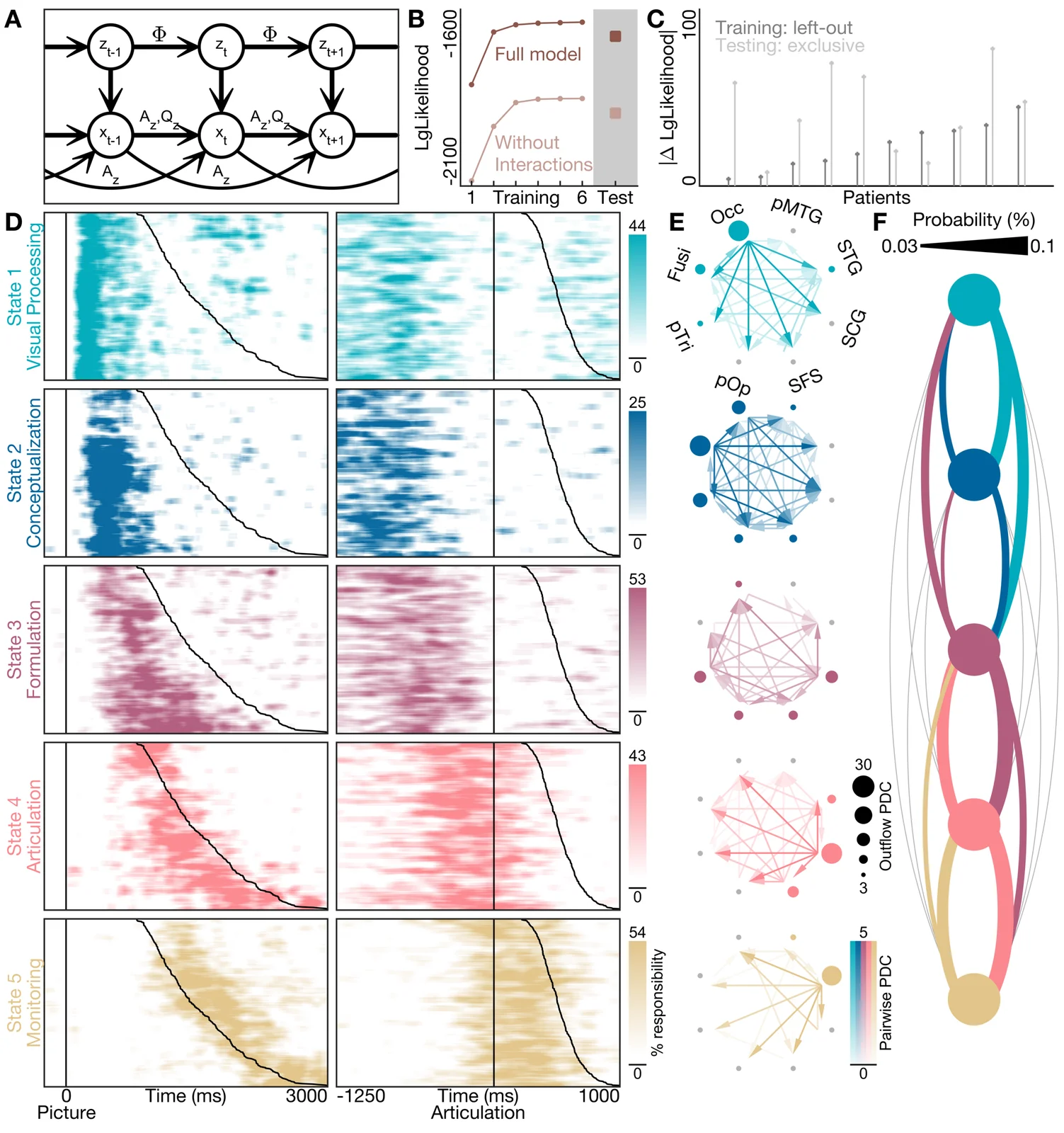
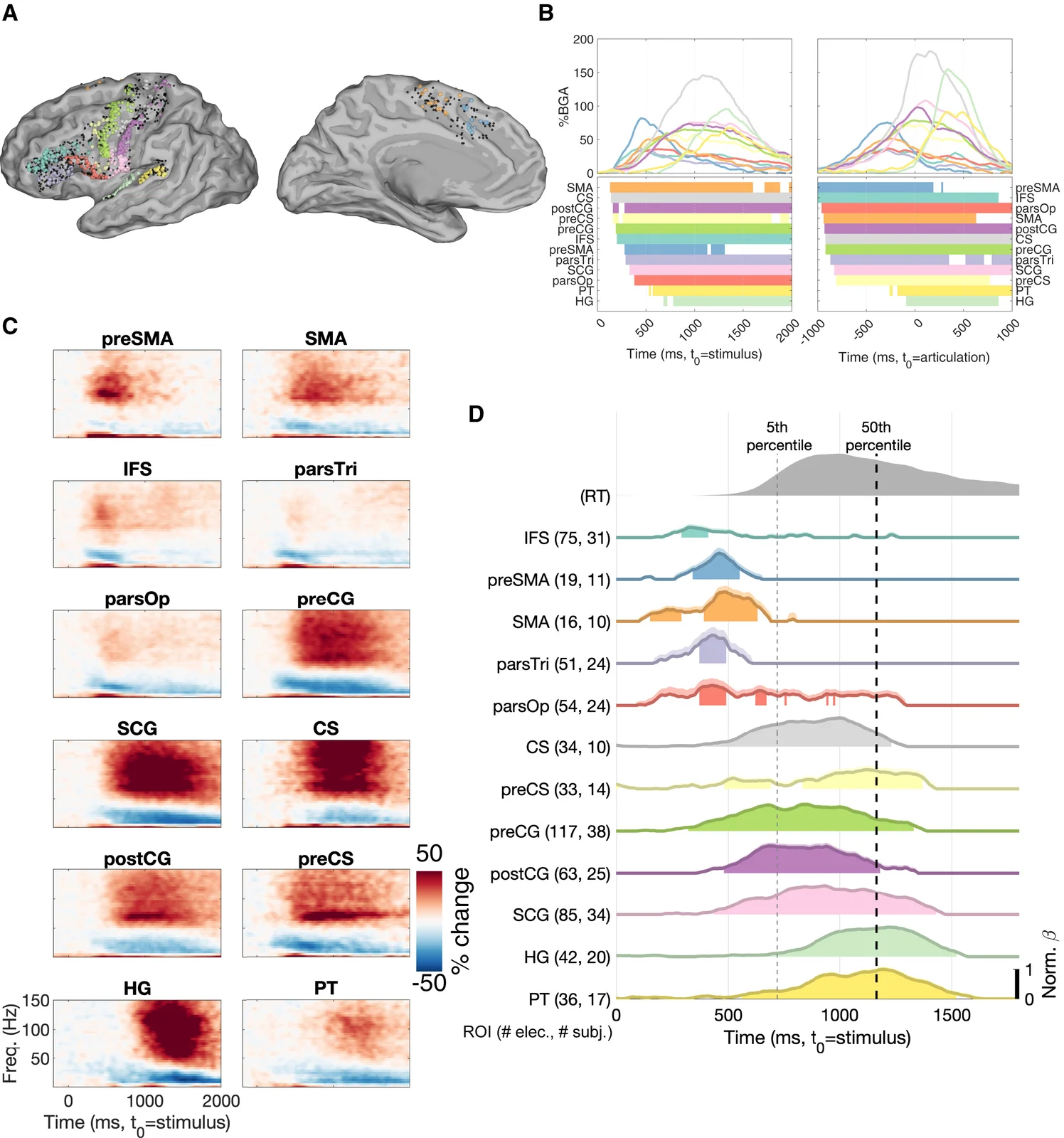
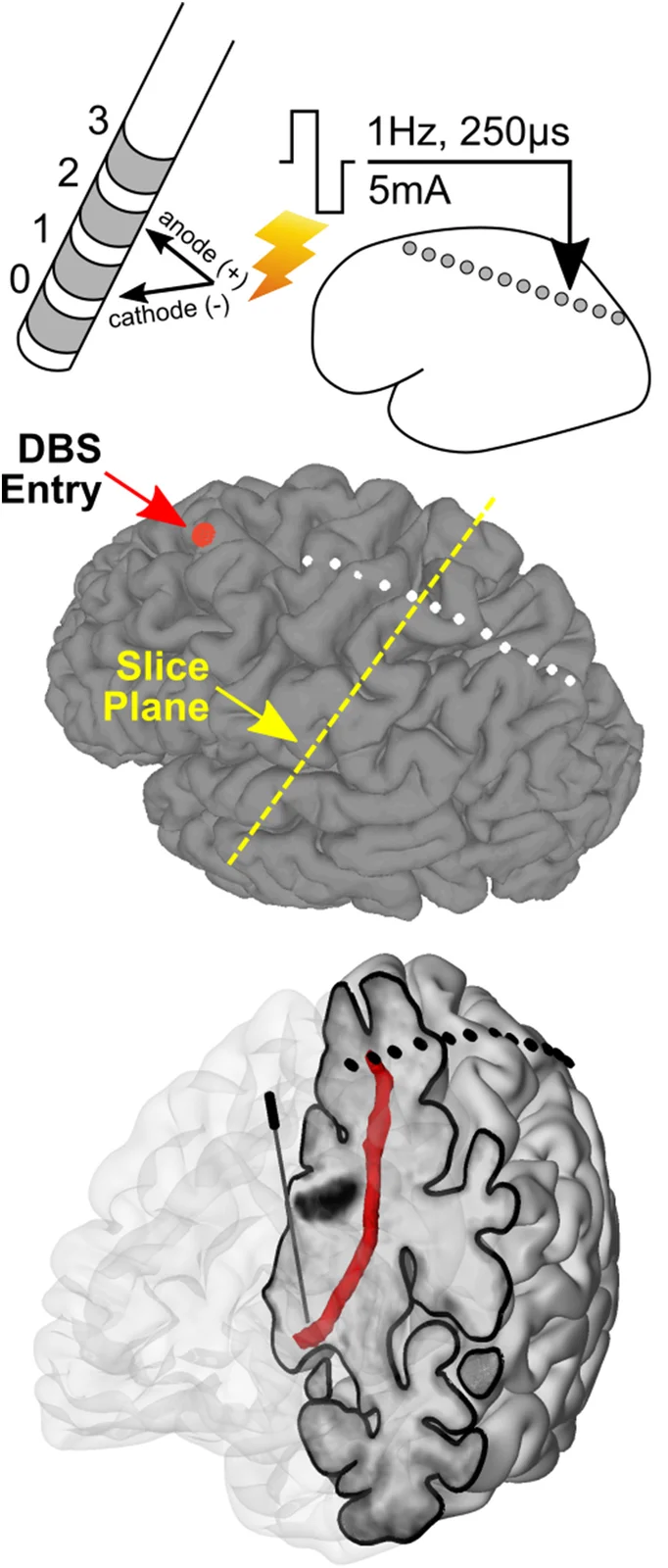
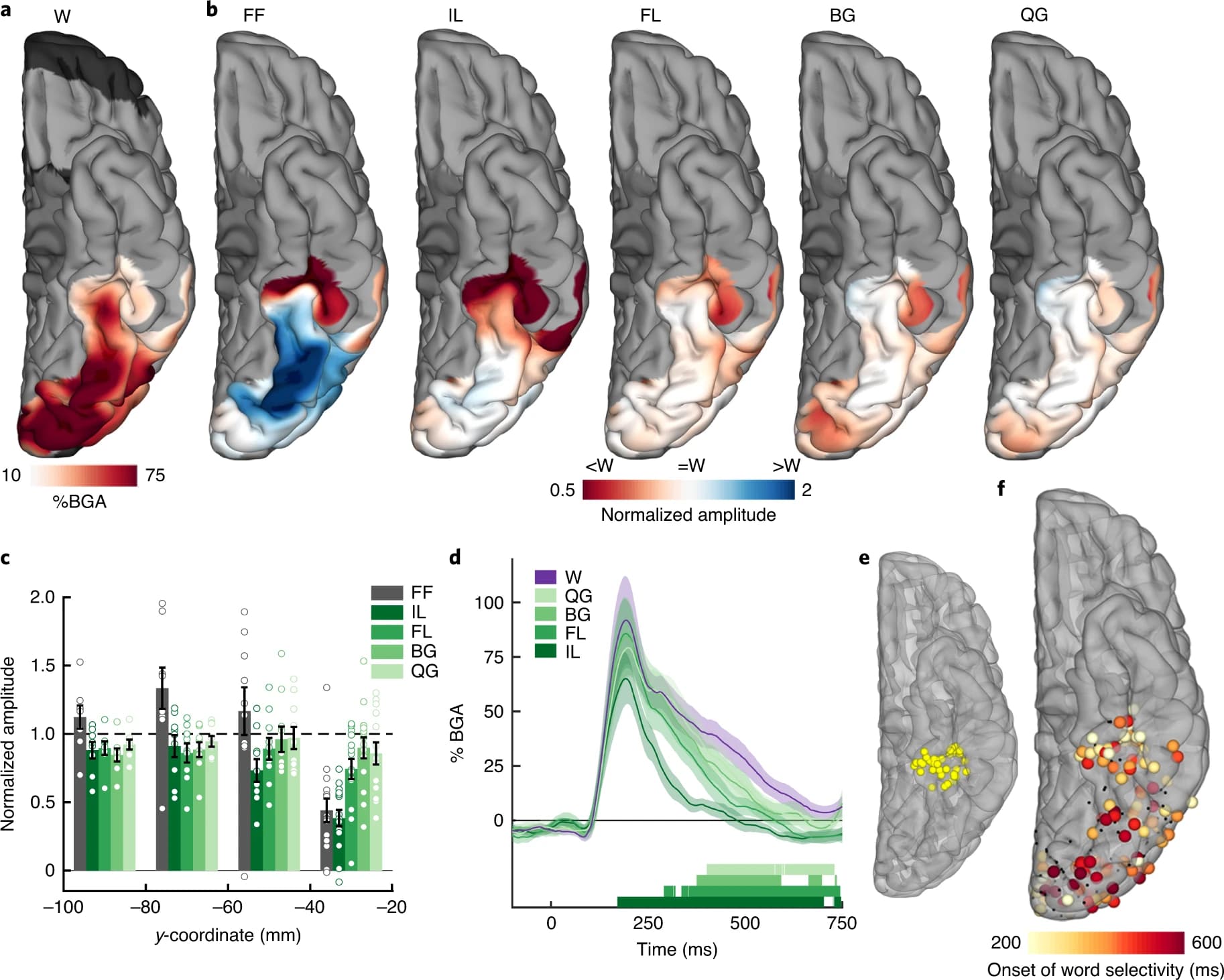
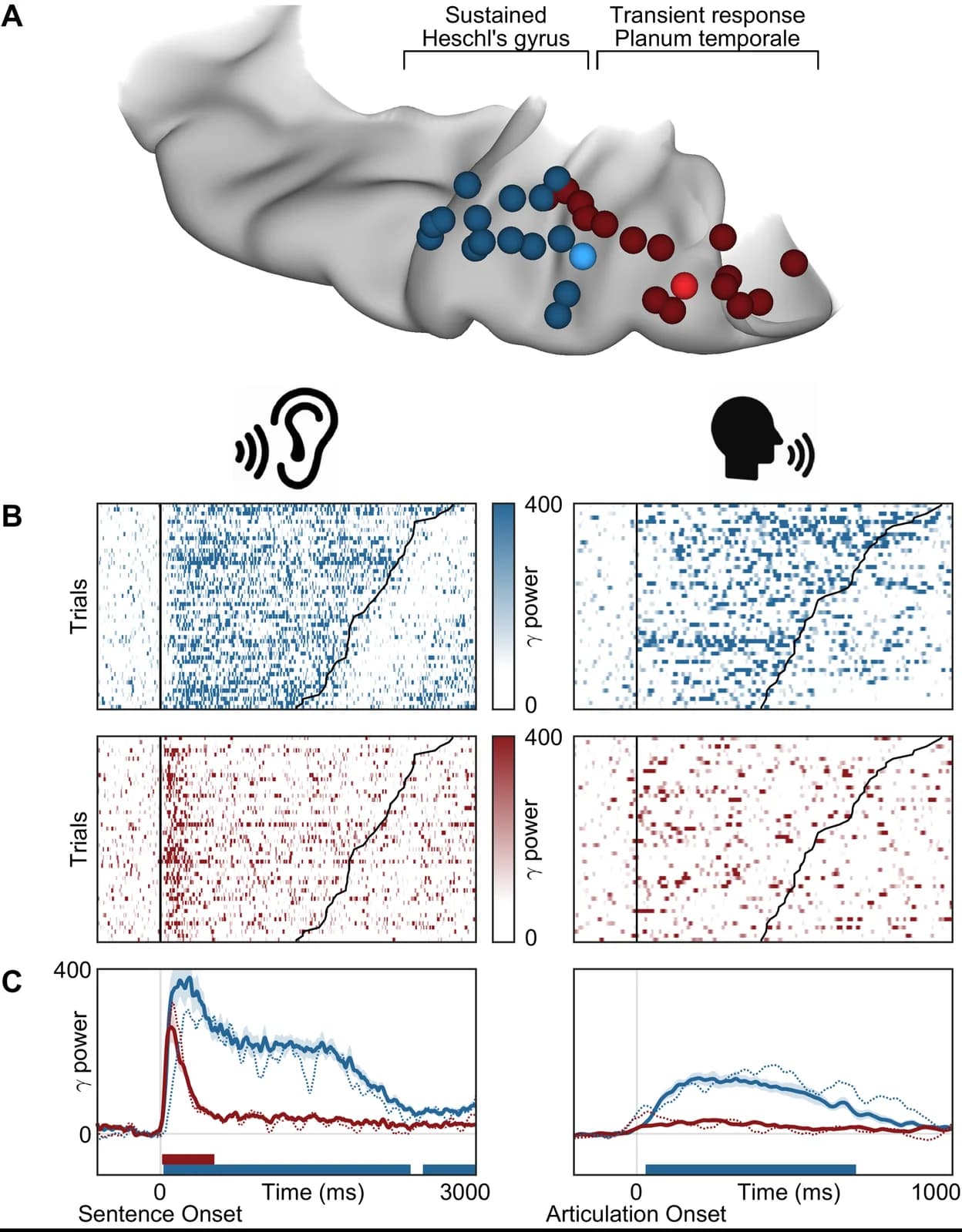
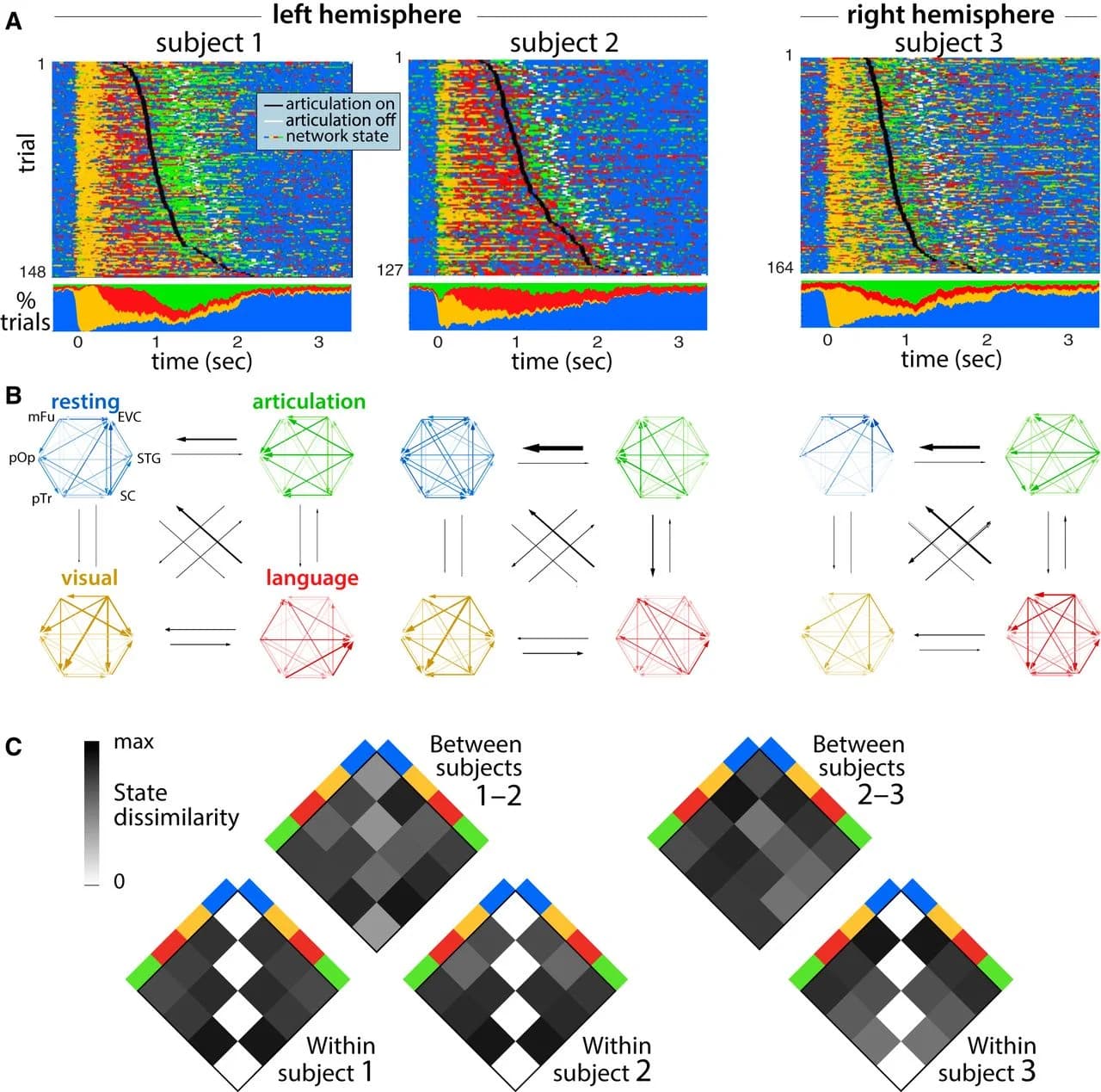
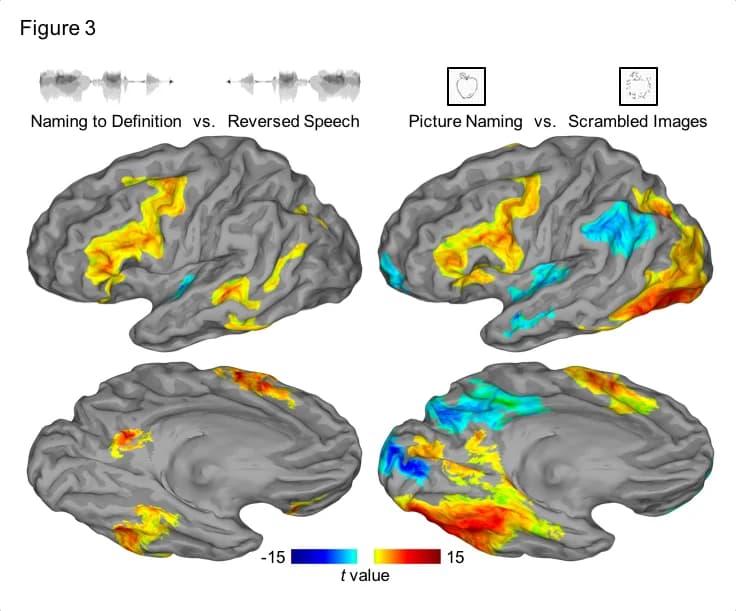
Language is a defining human behavior that emerges from a broadly distributed set of cortical substrates with complex network dynamics. We studied word production using direct intracranial recordings and cortical stimulation in a large cohort to create a detailed spatiotemporal atlas of the entire language-dominant cortex. From this map, we resolved network dynamics comprising sequences of state space transitions for each word articulated. This identified five discrete states for speech production in humans defined by unique patterns of directed interactions within the language network that were conserved across individuals. We then derived a computational lesion model of these state dynamics to elucidate their distinct functional contributions and validated these predictions with causal perturbation by cortical stimulation. Our work suggests that the fundamental unit of language processing in the brain is the global dynamical state. This functional architecture generalizes across individuals, enabling a new framework for understanding fluent speech production as well as speech impairment.